
From Reactive Expansion to Deliberate Fleet Architecture
Fleet Architecture Under Pressure

Why the Modern Yacht Program Is Becoming a Multi Vessel Equation
The last decade has quietly resolved one debate in the superyacht sector. The support vessel is no longer a novelty. It is a validated operational model.
What has not yet been resolved is how the industry structures these multi vessel programs.
Across the market, yacht programs are becoming more complex. Aviation capability, larger tenders, submersibles, expedition equipment, scientific payloads, and expanded crew operations are now common expectations rather than special requests. The result is a steady increase in operational density onboard vessels that were never originally conceived to carry that many overlapping systems.
In many cases, the response has been to continue enlarging a single platform. Helidecks are added late in the design cycle. Toy storage expands. Crane capacity increases. Crew spaces multiply. Technical systems grow more complex. At a certain point, the vessel stops becoming optimized and instead becomes layered.
This is where the real structural challenge begins.
The Shift From Single Platforms to Fleet Thinking
The most important transition happening in yacht design today is not simply the growth of support vessels. It is the emergence of fleet architecture as a design discipline. Fleet architecture asks a different question. Instead of asking how much capability can be absorbed into one vessel, it asks how capability should be distributed across multiple vessels so that each platform can operate efficiently.
Two optimized vessels often outperform one oversized platform for several reasons.
First, engineering efficiency improves. When aviation operations, heavy crane work, and tender launch systems are concentrated on a dedicated support vessel, the mothership can remain optimized for guest experience and long range cruising. Stability margins, deck geometry, and operational workflows become clearer.
Second, lifecycle economics improve. A fleet structure allows technical systems and operational risk to be distributed rather than concentrated. Maintenance cycles, refit planning, and upgrade pathways become easier to manage across separate vessels with defined missions.
Finally, operational flexibility increases. Programs can adapt to expedition cruising, charter use, or scientific activity by adjusting how vessels are deployed rather than trying to force every capability into a single structure.
This shift from vessel design to fleet design is becoming one of the defining conversations in the industry.
The Operational Perspective


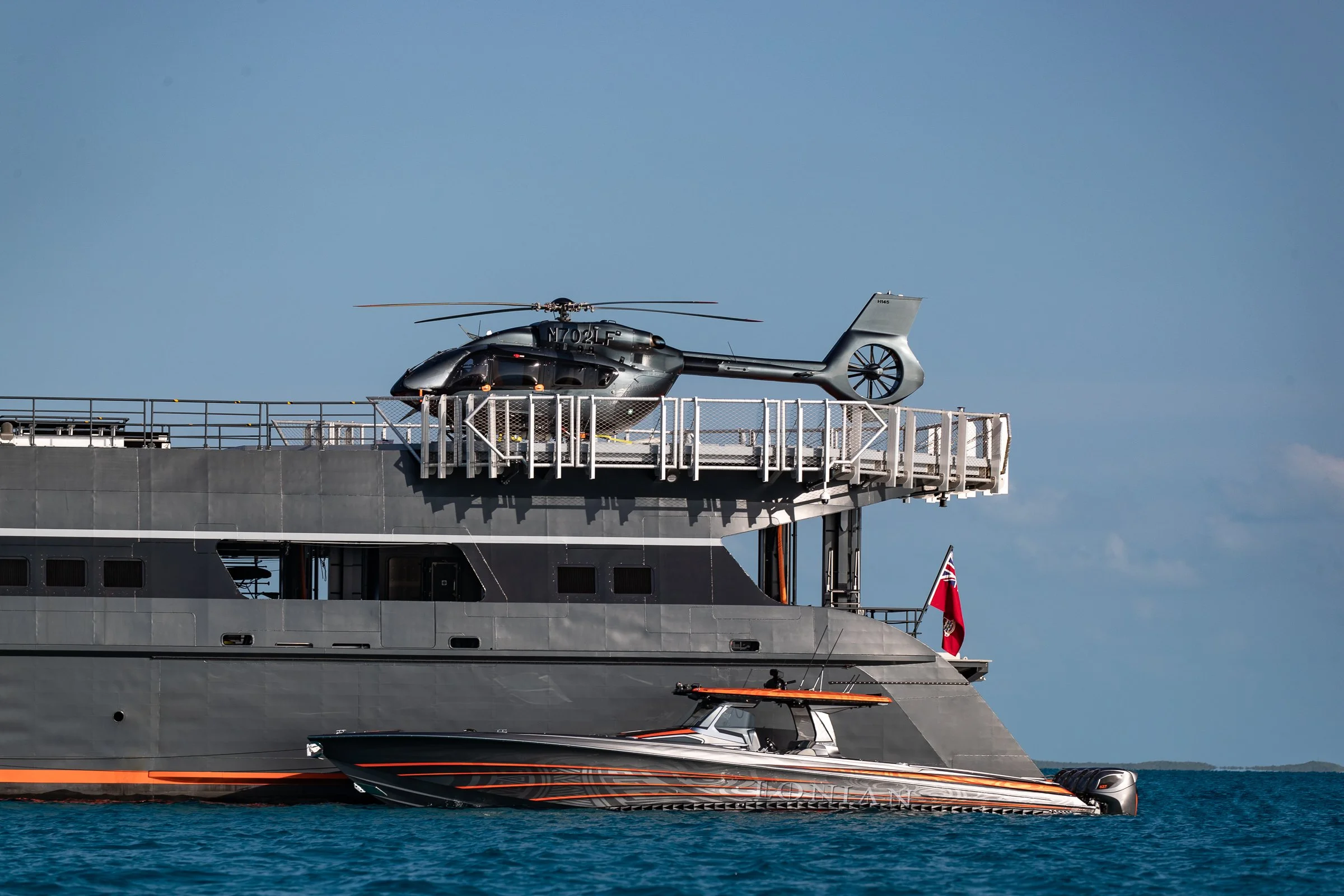
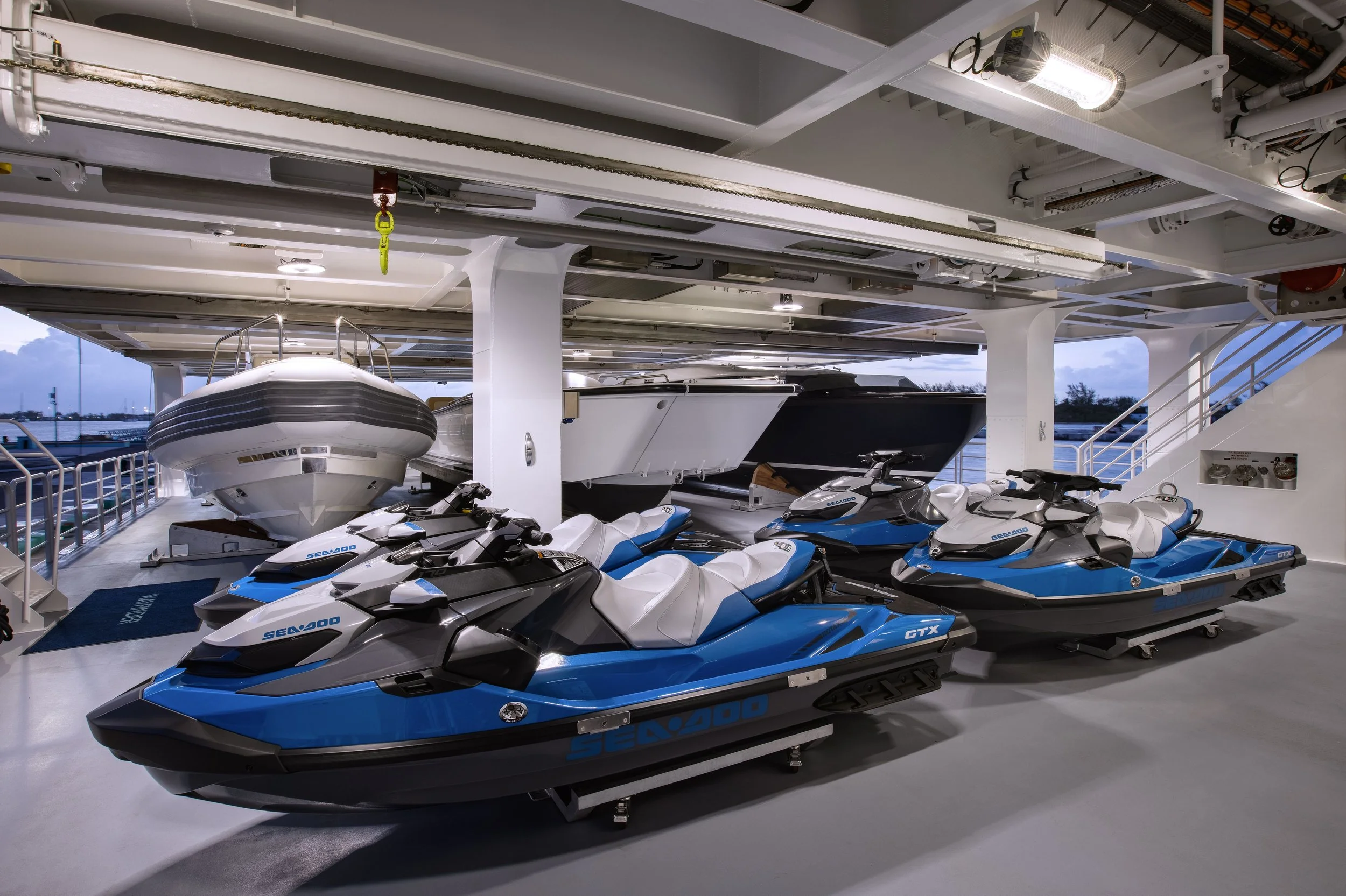
For captains and operational teams, these structural decisions translate directly into daily realities onboard. Crew specialization increases as aviation teams, dive specialists, engineers, and tender operators become part of the program. Equipment maintenance expands. Operational workflows become more complex.
In a well structured multi vessel fleet, these responsibilities can be distributed logically. Aviation operations can be concentrated on one platform. Equipment maintenance can be centralized. Crew expertise can be organized more efficiently.
When these systems are forced into a single platform, however, compromise tends to appear in predictable places. Deck space becomes congested. Operational workflows overlap. Crew capacity reaches its limits. The vessel still functions, but the margins for efficiency narrow.
Moving the Conversation Upstream
One of the most consistent lessons from recent yacht programs is that structural misalignment often occurs very early in the design process. By the time equipment programs, aviation capability, and operational requirements fully emerge, many fundamental decisions about hull form, beam, deck strength, and spatial allocation have already been made. This is why the industry is beginning to move the conversation upstream.
Early feasibility modeling can evaluate how a yacht program might function as a coordinated fleet rather than a single vessel. Naval architects, aviation specialists, equipment suppliers, and operational advisors can contribute to the same planning framework. Programs can begin with a structured roadmap that distributes capability intelligently across multiple platforms.
In practical terms, this approach reduces redesign risk, improves operational clarity, and often results in more efficient vessels.
The Question Facing the Industry
The superyacht sector has already answered one question. Owners clearly value the capability expansion that support vessels provide. The question now facing designers, shipyards, and program teams is more nuanced. Are these fleets being structured intentionally?
As yacht programs continue to incorporate aviation infrastructure, larger equipment inventories, and more specialized operations, the architectural discipline required to support them must evolve as well.
Continuing the Conversation at Palm Beach
Shadowcat will be participating in a special seminar designed to explore this topic in more detail. Join us at the 2026 Palm Beach International Boat Show, where a panel of industry experts discuss fleet architecture as it relations to operations, aviation, equipment density and more.