
CAPEX and OPEX in Multi-Vessel Programs
Myths vs Reality at Scale
In our previous article, we explored a shift in how capability should be understood within a yacht program. Not as a static measure of what a vessel can carry or deploy, but as something far more dynamic.
Capability, in practice, is defined by how quickly the vessel becomes available, how reliably it can be used, and how many systems can operate simultaneously under real conditions.
Once capability is viewed through that lens, the financial conversation begins to change. Capital Expenditure (CAPEX) is no longer just about how much is spent to build a vessel. Operational Expenditure (OPEX) is no longer just about what it costs to run it. Both become directly tied to how effectively that capability can be accessed, sustained, and used over time.
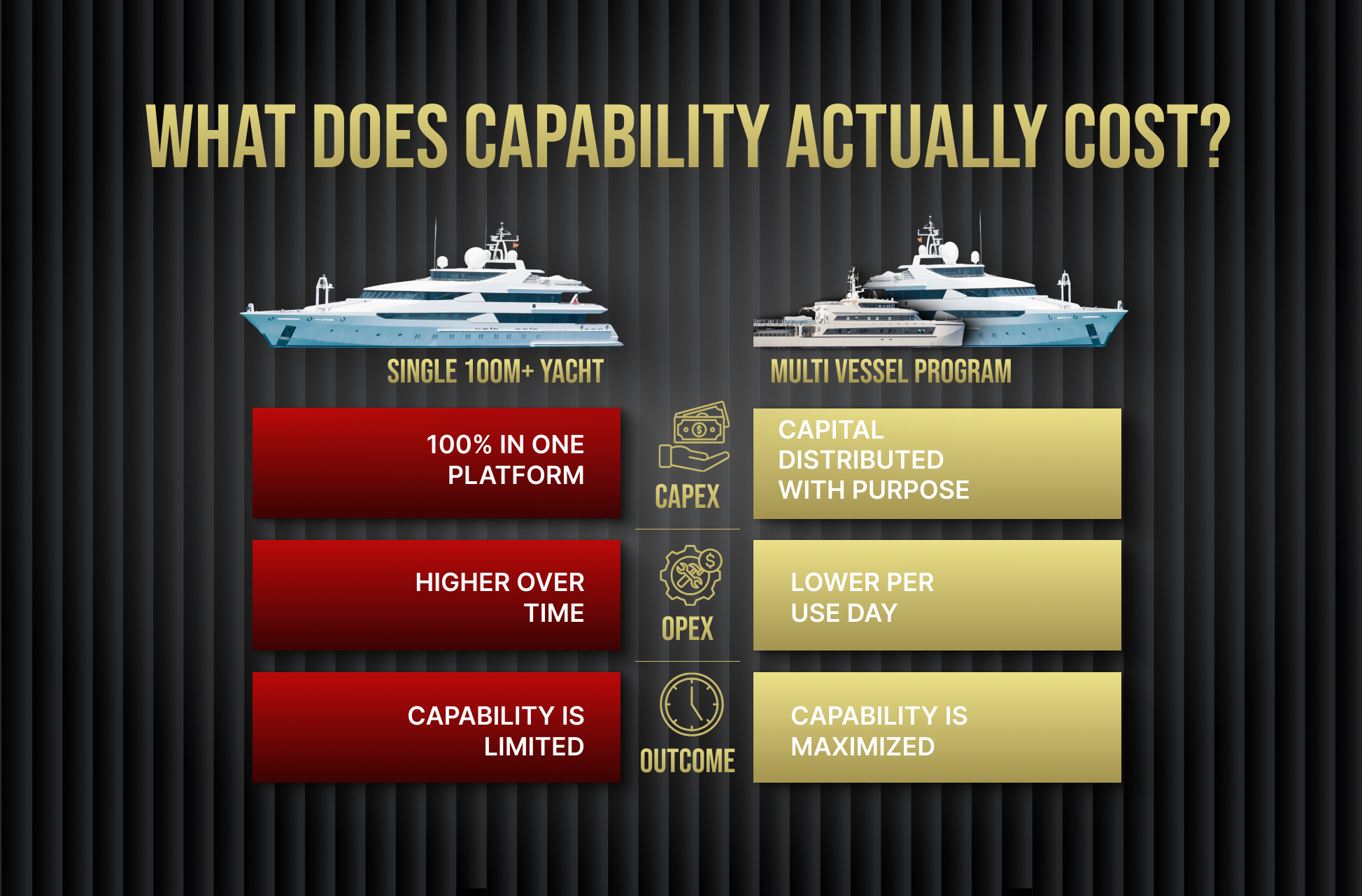
This is where many traditional assumptions begin to break down.
A single large yacht may present as the most efficient solution on paper. But when evaluated against speed of deployment, operational reliability, and the ability to deliver multiple experiences at once, the underlying economics become less clear.
We want to explore those assumptions more closely by comparing the financial structure of a single platform against a multi-vessel program, and reframing CAPEX and OPEX not as isolated costs, but as part of a broader equation tied to real world capability.
CAPEX: The Shift from Scale to Allocation
At smaller sizes, increasing length delivers predictable returns:
More volume
More range
More flexibility
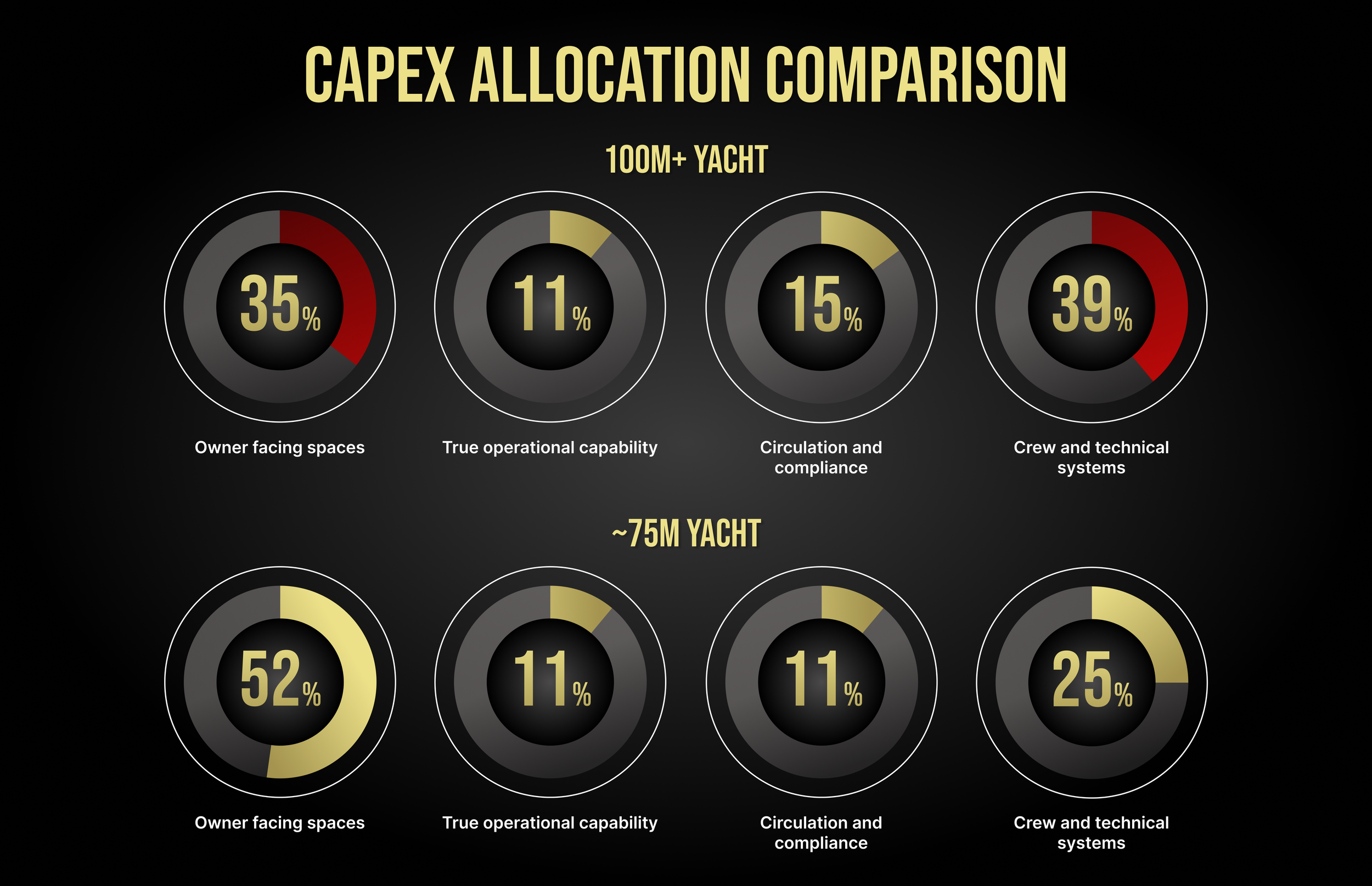
As yachts increase in size, they carry an implicit promise that greater capital will unlock greater capability, with owners expecting a proportional expansion in what the vessel can do. In reality, once a vessel moves into superyacht scale (80m+), that relationship breaks down: capital continues to increase, but its impact shifts. Capital is consumed by the systems required to sustain the scale, rather than translating into usable capability. This exposes a clear gap between expectation and reality.
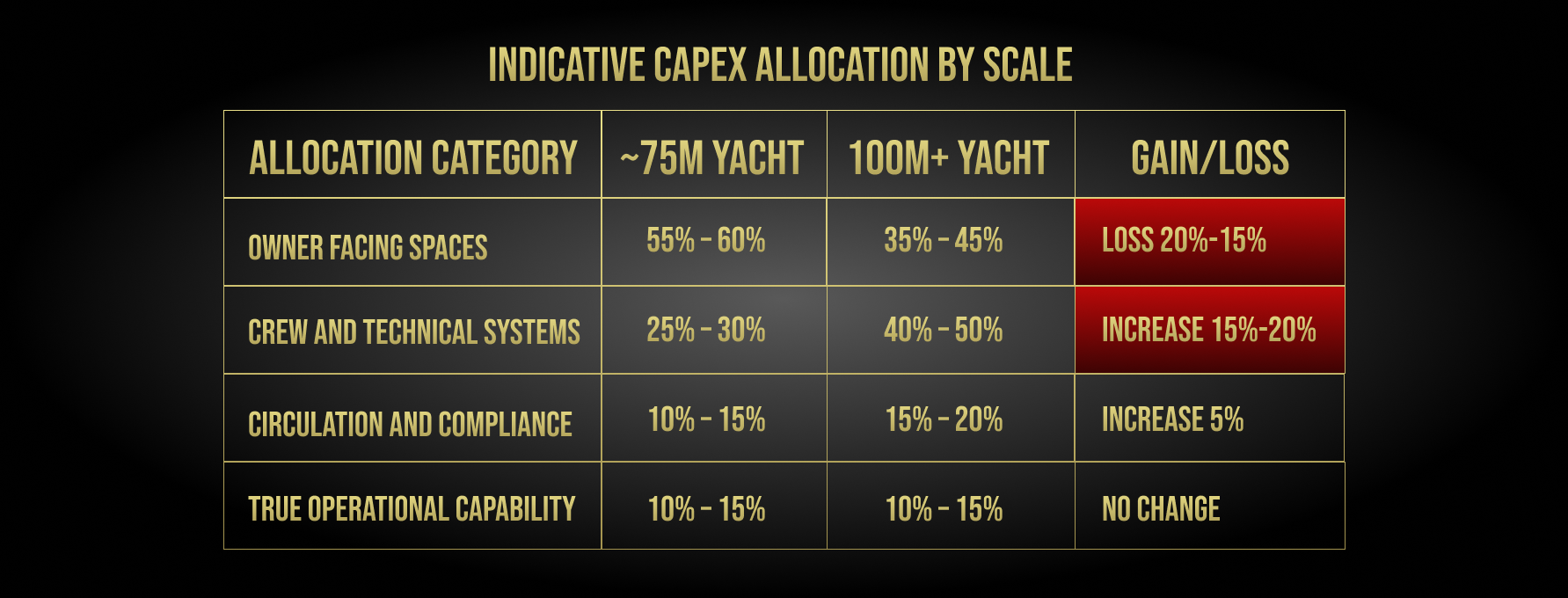
Single Platform vs Distributed Capital
In contrast, when the same level of investment is evaluated across a multi-vessel structure, the allocation begins to look different.
Instead of concentrating capital into one system that must balance competing demands, it is distributed into two platforms, each designed to perform specific roles.
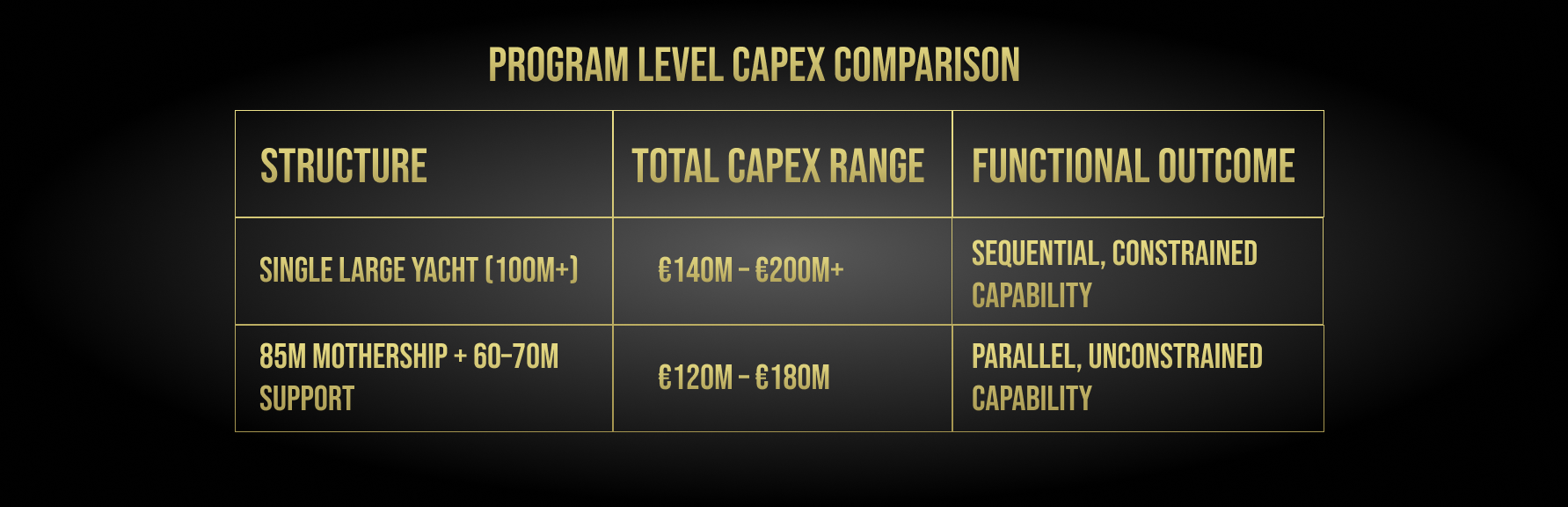
The total investment for two vessels is often closer to a single yacht than expected and what changes is how much of that investment produces usable outcome.
OPEX: Complexity, Not Size, Drives Cost
We must include operating costs in the complete financial equation. Operating costs are often viewed as a simple extension of build cost. A larger yacht costs more to run.
That is true in absolute terms. It is incomplete in practice. As vessels grow, density begins to outpace scale.
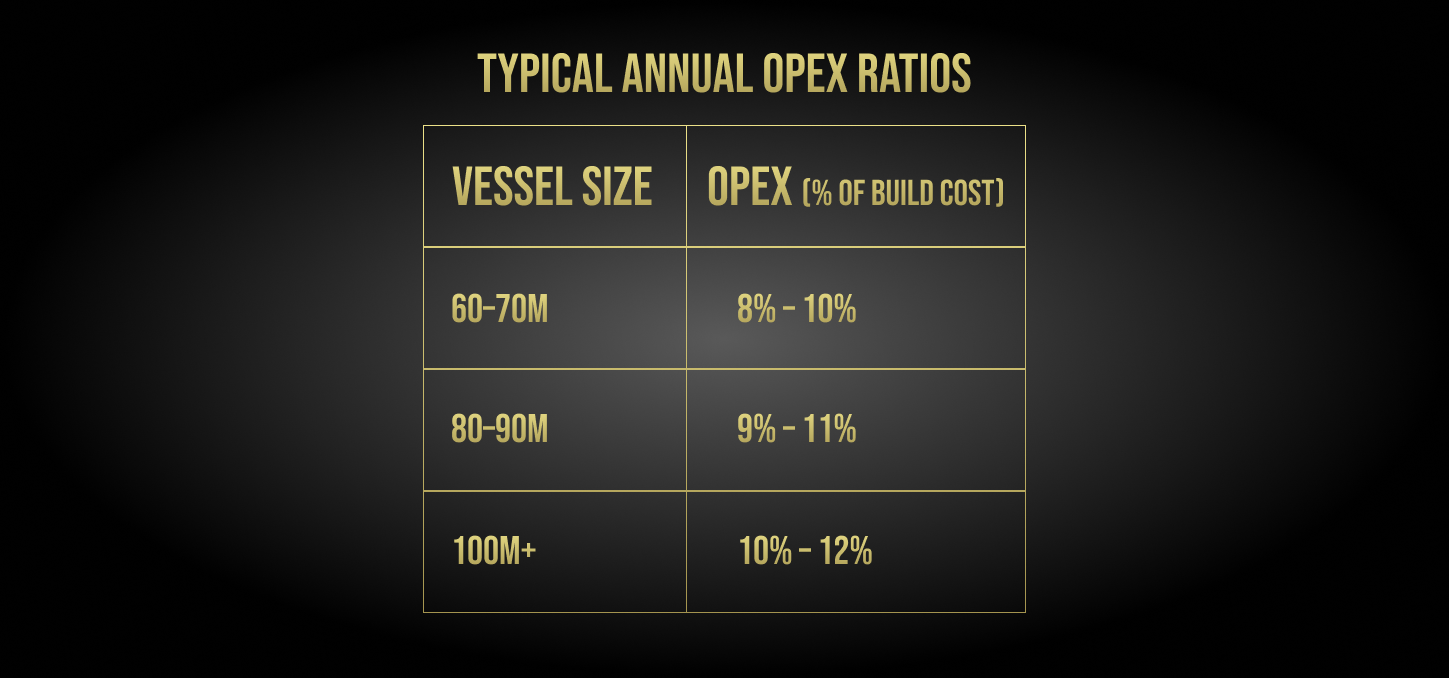
The increase is driven less by length and more by the density of systems, crew requirements, and operational overlap within a single platform.
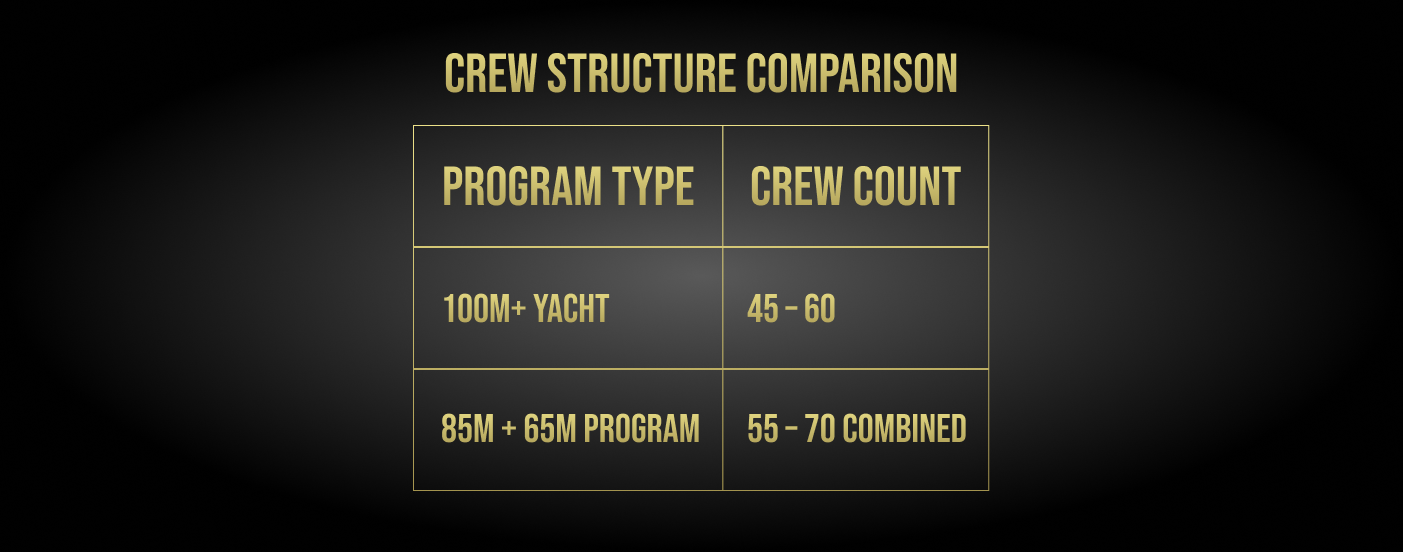
At first glance, two vessels suggest duplication. More crew. More systems. More cost.
What changes in a multi-vessel program is how those resources are used and where efficiencies can be gained.
Instead of one crew switching between incompatible operational modes, each vessel supports a defined function. The opportunity for crew specialization reduces friction, improves execution, and allows both platforms to operate simultaneously.
Maintenance follows a similar pattern. In a single vessel program, refit means downtime. In a multi-vessel structure, refit becomes a scheduling exercise rather than a loss of capability.
Time as a Financial Variable
Time is rarely treated as part of the financial model and it should be.
In a traditional program, capital is deployed continuously, but capability remains inaccessible until completion. In a distributed program, capability comes online in stages.
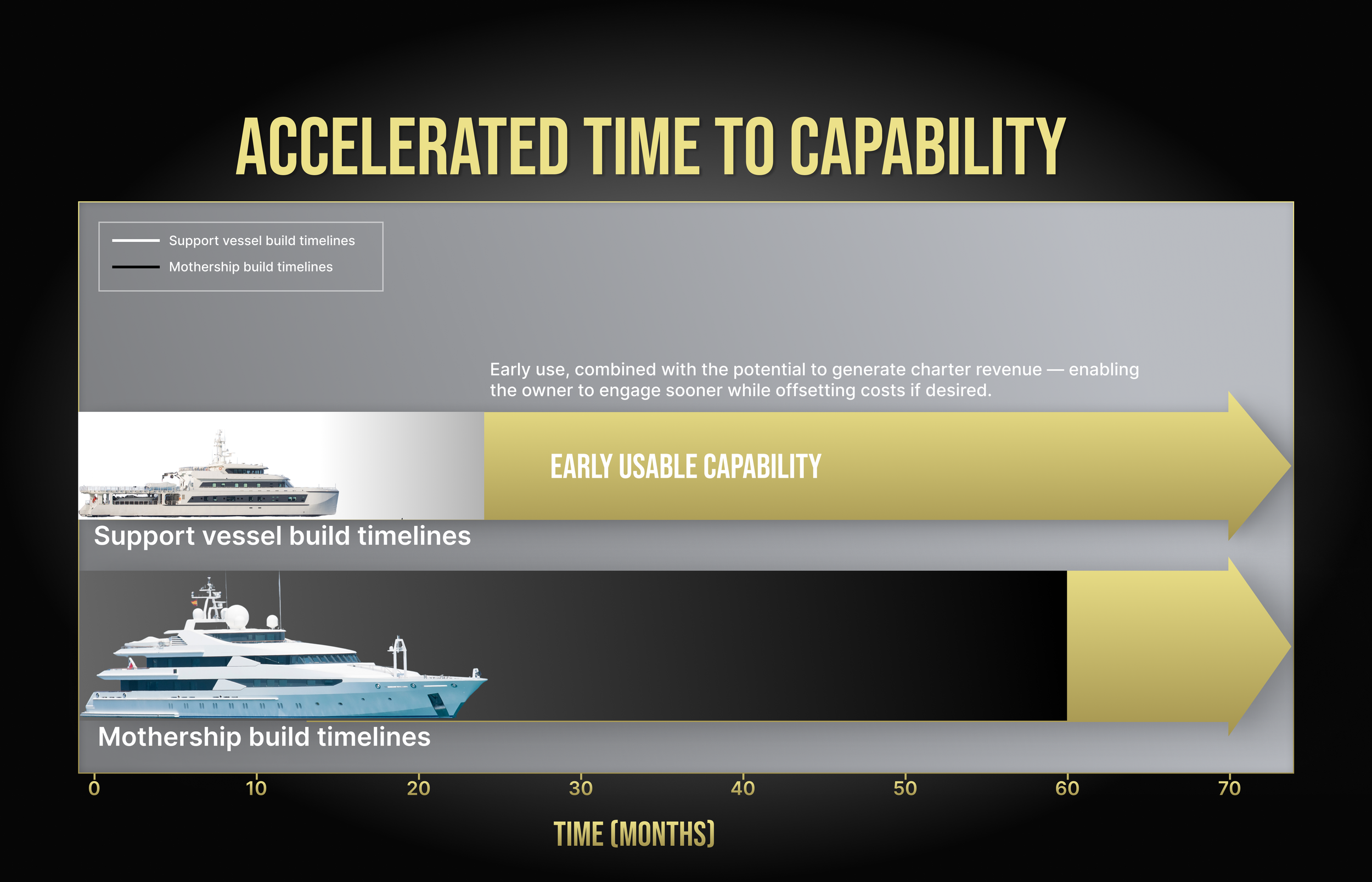
Single vessel: delayed start, single activation point
Multi vessel: staggered delivery, overlapping usage
A single vessel can take 8-10 years from contract to delivery because of shipyard slot availability and actual time to build. In a multi-vessel program, if the mothership and support vessel begin in tandem, or the support vessel is started first, owners can begin to experience the fruit of their capital deployment much sooner.
An owner can not only begin using the support vessel before taking delivery of the mothership, but also reap the benefits of chartering revenue.
Maintenance, Refit, and Continuity
We should also consider “operational time” from a post-delivery perspective. How many useable days (under real conditions) does the owner have access to over five years?
A single vessel operates on one calendar. When it is unavailable, the program is unavailable.
A multi-vessel structure decouples that constraint. One platform can remain active while the other is maintained, repositioned, or repurposed.
This is where the operational advantage becomes most tangible.
A single vessel must periodically step out of service. Planned refits, unplanned maintenance, regulatory surveys.
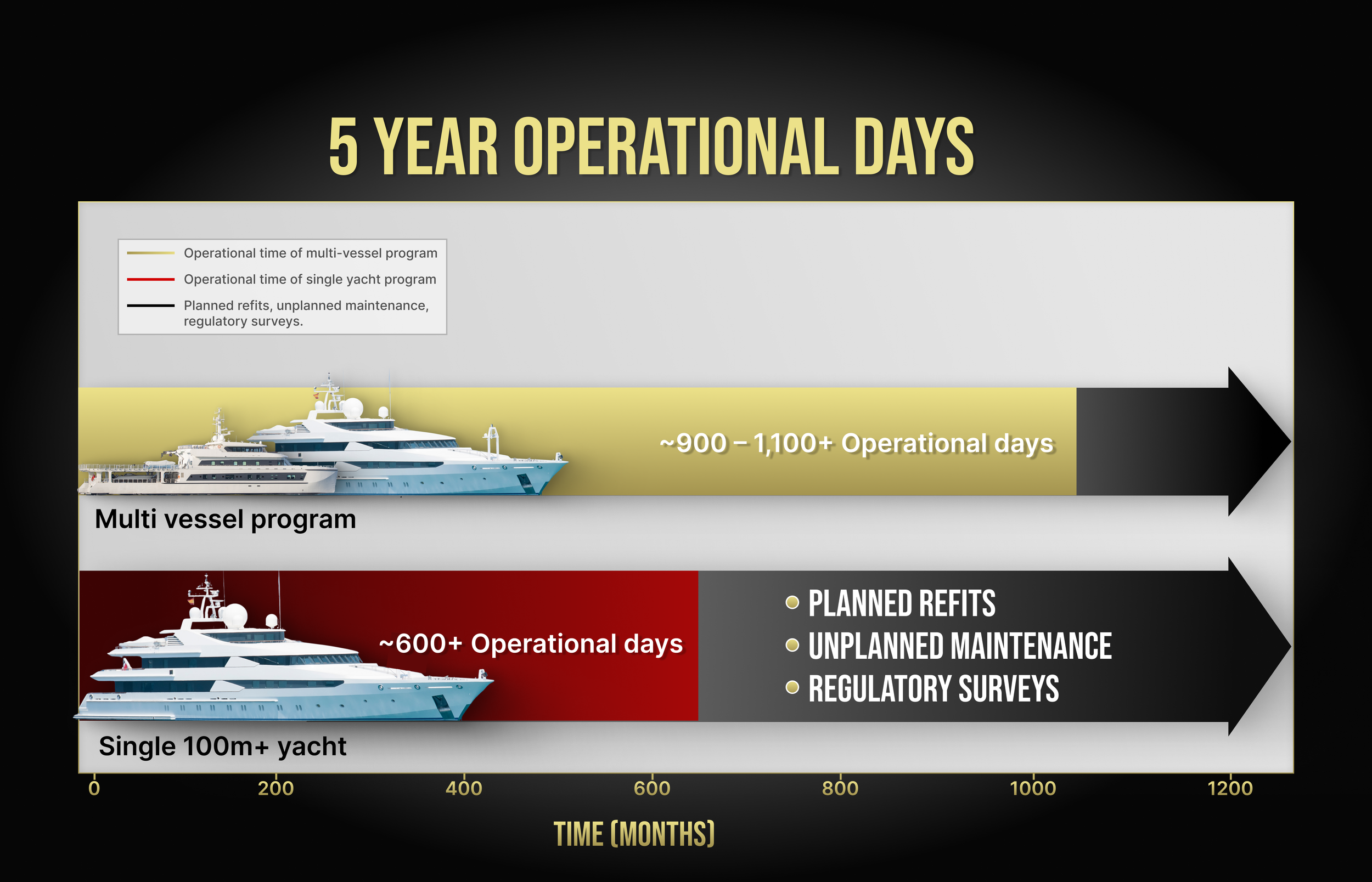
During those periods, the program pauses.
In a dual vessel structure, continuity is preserved.
One vessel can remain fully operational while the other undergoes maintenance. From the owner’s perspective, the program never stops.
Cumulative Operational Availability
This is not just convenience. It is continuity of experience.
Charter as a Financial Offset
Charter is often treated as optional. In a multi-vessel structure, it becomes strategic. A support vessel can operate independently, without impacting the primary yacht. Using conservative numbers (2 – two-week charters per year), the owner will still recoup $10M in revenue over five years.
Five Year Charter Scenario
Two charters per year
Two weeks per charter
$500,000 per week
Total Revenue Over Five Years: ~$10M+
Chartering does not eliminate operating costs, but it greatly impacts how that cost is experienced. Instead of a purely outgoing expense, the asset begins to generate selective return.
Experience as the Final Metric
Financial models tend to stop at cost. Owners do not.
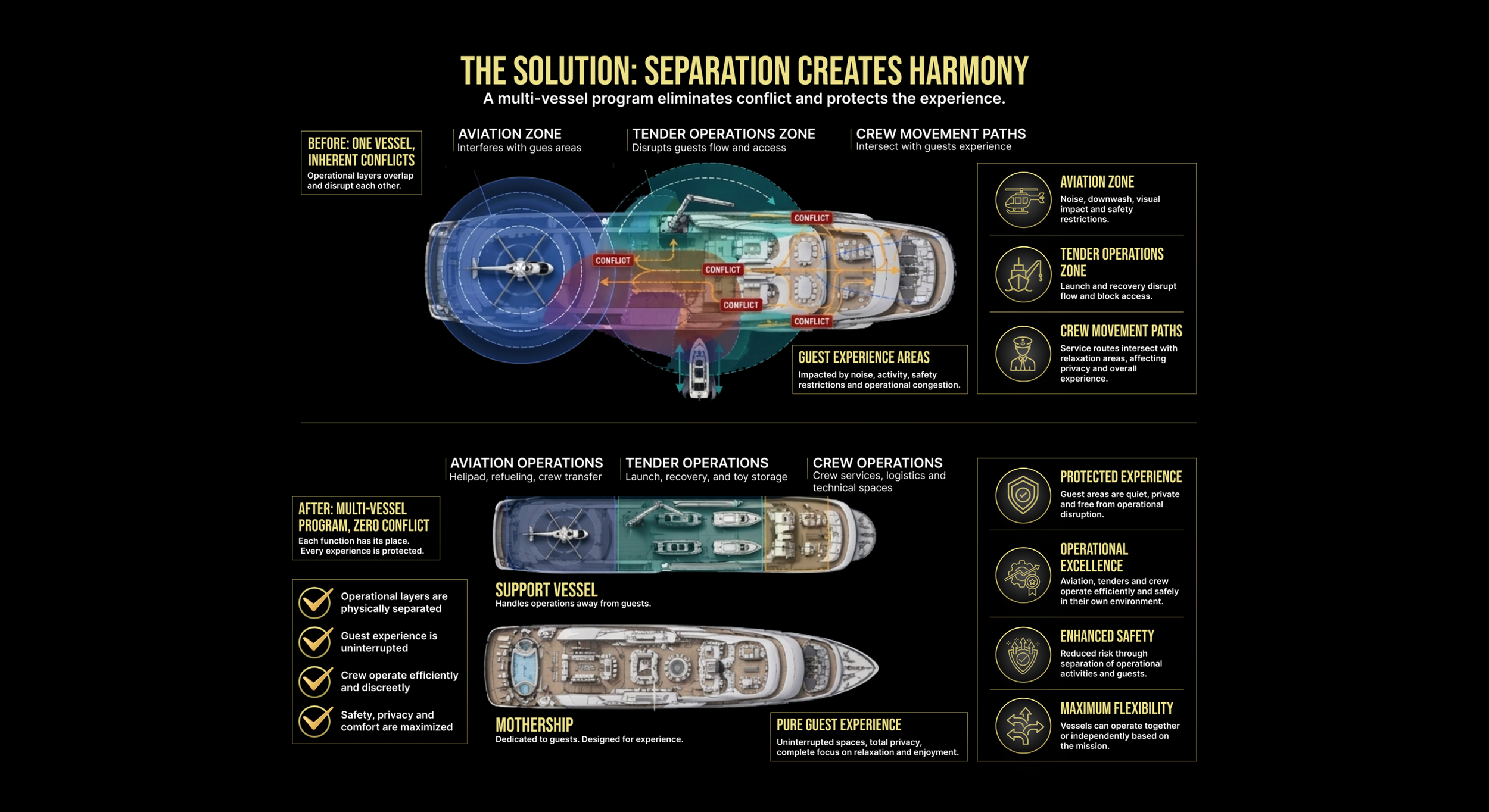
On a single platform, operational demands compete for space, time, and attention. Aviation affects guest areas. Tender operations disrupt flow. Crew movement intersects with experience.
In a distributed structure, those conflicts are removed.
Operations and lifestyle are separated. All systems can be used simultaneously. The experience becomes consistent rather than conditional.
Conclusion
At the highest level of the market, the question is not whether one vessel costs less than two.
It is whether the capital is aligned with how the owner actually intends to use it.
A single large yacht concentrates investment into a platform that must balance every requirement at once.
A multi-vessel program distributes that same investment into systems that can operate independently, come online earlier, and remain active over time.
The difference is not just financial.
It is operational.
It is experiential.
And ultimately, it is how effectively the program delivers on what it was meant to do.