
A Better Platform for Yacht Aviation
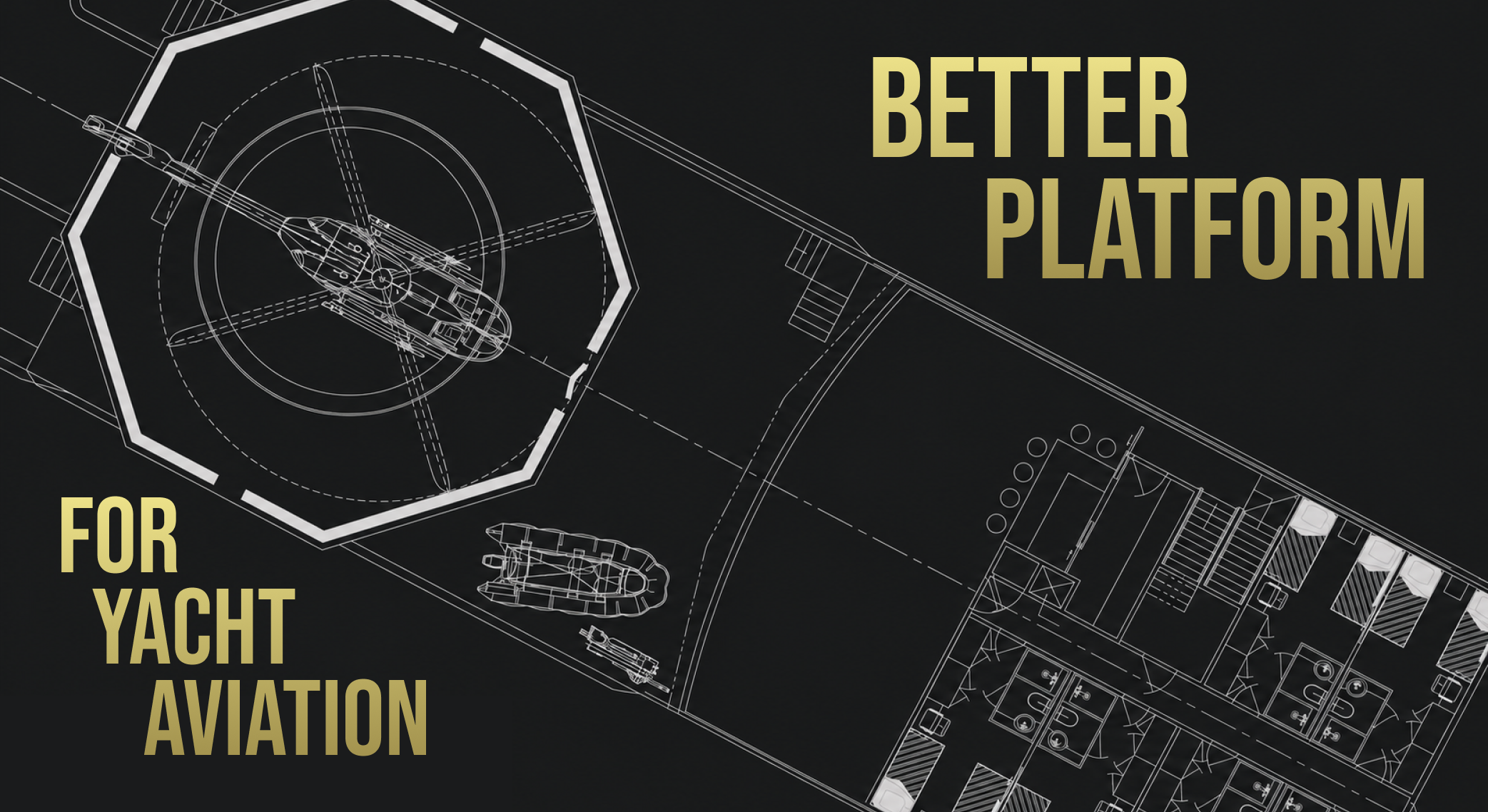
The Advantages of Helicopter Operations from a SHADOWCAT vessel
Owners who rely heavily on helicopters as part of their yachting program understand that aviation capability extends far beyond providing a place for the aircraft to land. Supporting the complete lifecycle of helicopter operations requires safe takeoffs and landings, aircraft storage and protection, fueling, maintenance, crew workflow, spare parts, equipment, and the infrastructure that keeps the aircraft protected, supported and ready for its next mission.
Moving those requirements off the mothership and onto a shadow vessel can eliminate many of the compromises aviation would otherwise impose on the main yacht. But these compromises are reduced ONLY if the shadow vessel is designed to meet the operational demands of that lifecycle. A truly capable aviation platform does more than carry a helicopter. It gives pilots, engineers and aviation crew the space, systems and facilities they need to operate effectively, while allowing life aboard the main yacht to continue uninterrupted.
This is where a purpose-built SHADOWCAT companion vessel offers significant advantages.
The Catamaran Advantage: Strength, Beam and Stability
Helicopter operations place substantial demands on a vessel. The aircraft itself represents a concentrated load and requires significant clear space, while aviation systems, fuel, firefighting equipment, maintenance facilities and hangars add further demands on structure, deck area and volume.
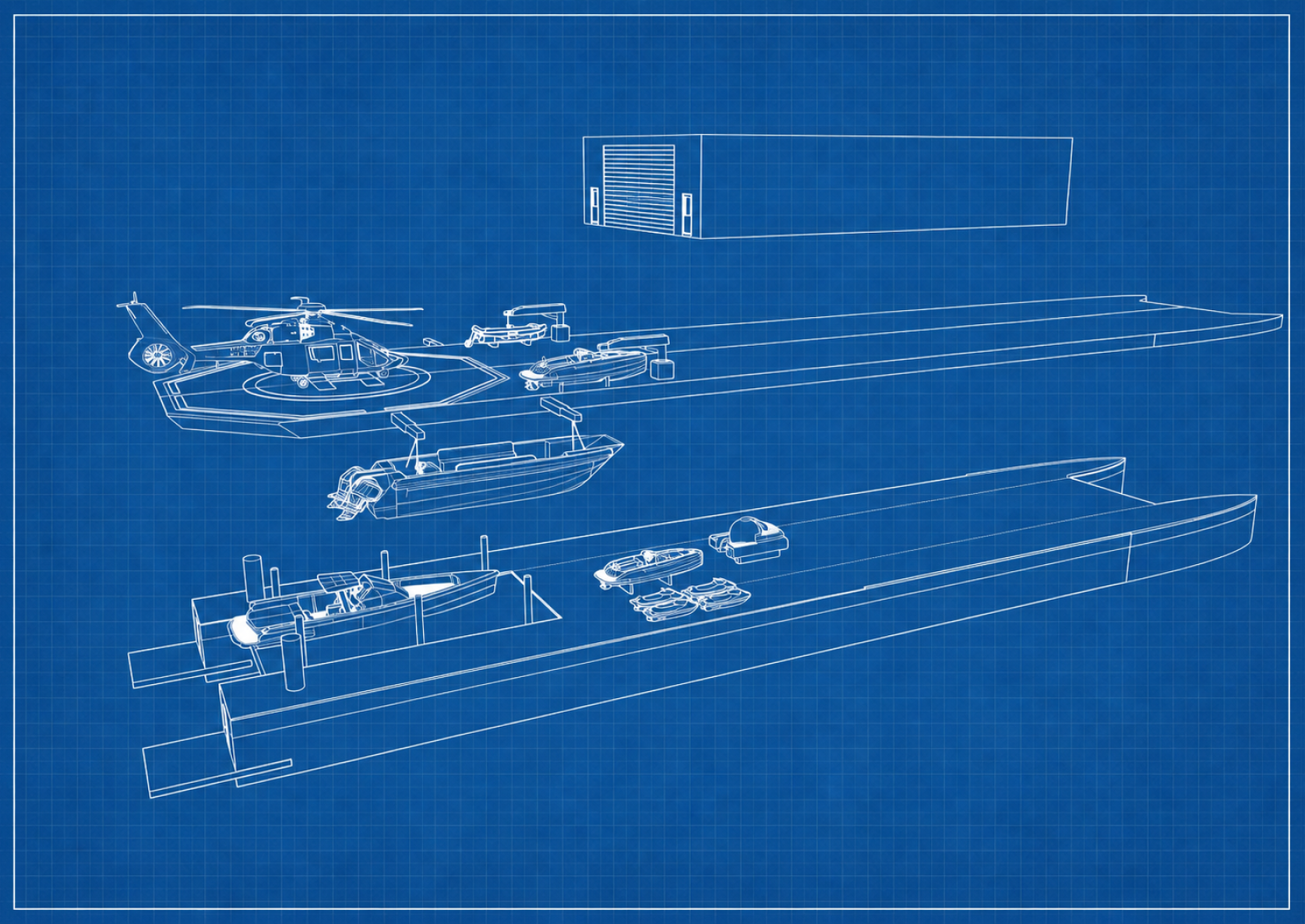
This is where the catamaran has a fundamental architectural advantage. At its core, it is a platform supported by two widely spaced hulls, creating a broad, inherently robust structure designed to carry substantial operational loads across a large deck area. The catamaran’s primary platform structure and twin-hull configuration already provide capacity that can far exceed those requirements. Its wide beam then provides the additional space needed for a generously sized helideck, aviation infrastructure and hangar facilities while still allowing other vessel operations to take place alongside them.
A Certified Helipad Changes the Equation
There’s a phrase often used in yachting: the “touch-and-go” helipad. But in normal yacht operations, helicopters don’t simply touch and go. They land. And that makes a properly engineered and certified landing facility all the more important.
When a helicopter arrives on a yacht, the expectation is that it will come to rest on the deck, potentially remain there for some time, embark or disembark passengers, refuel, and possibly be moved into a hangar.
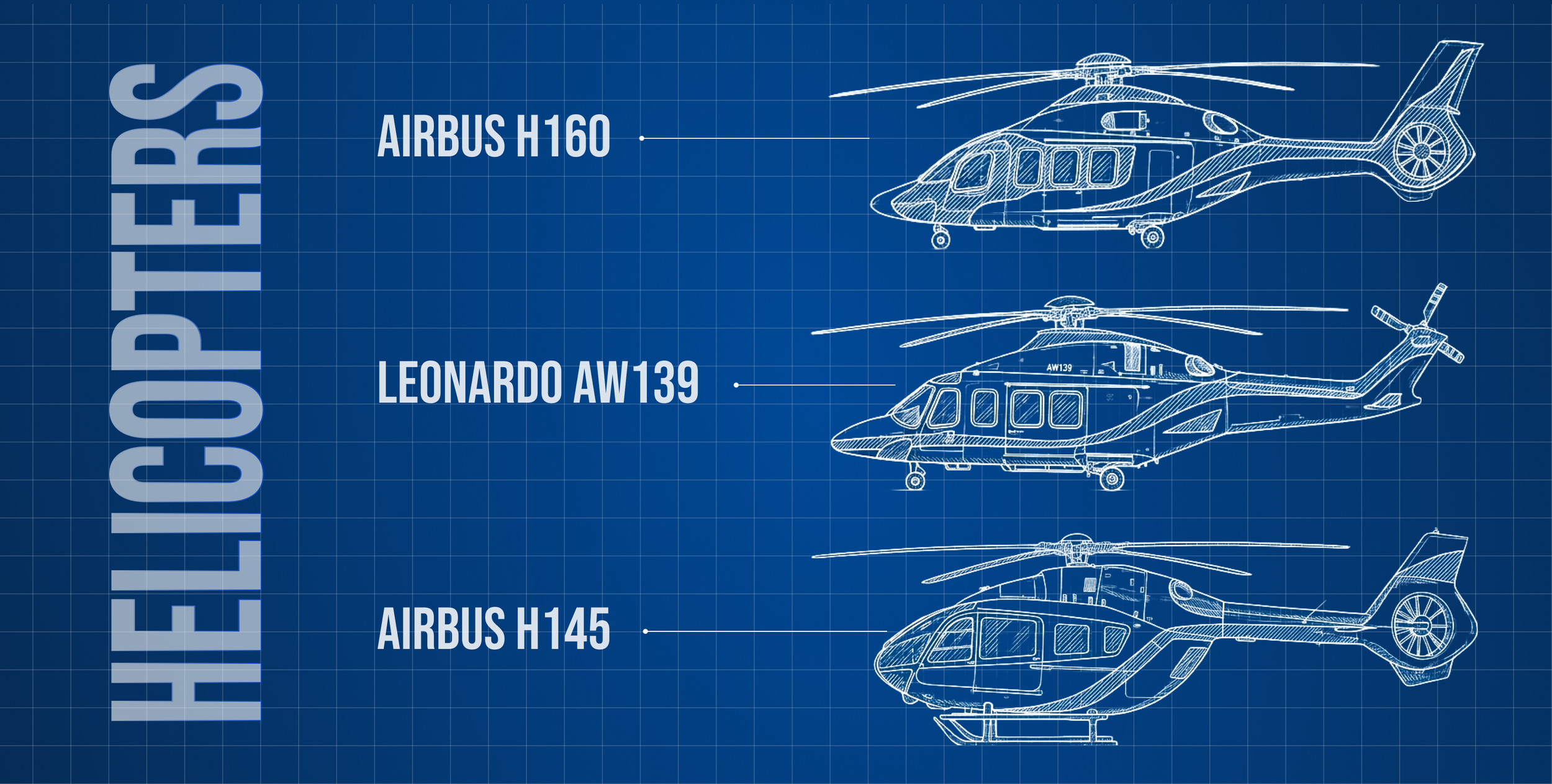
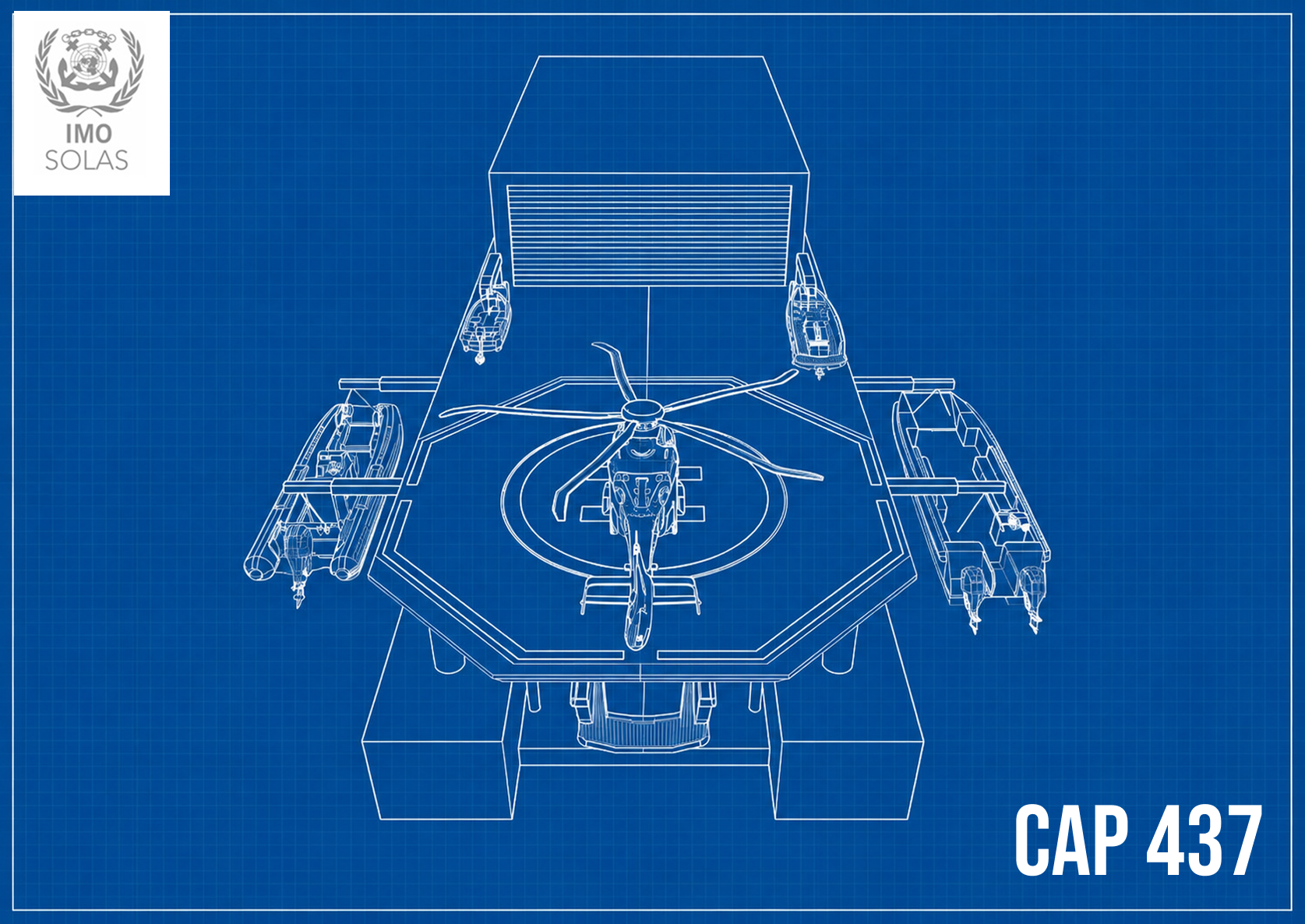
SHADOWCAT helidecks are designed as fully certified landing facilities for substantial aircraft, including helicopters up to the Airbus H160 class, as well as models such as the Leonardo AW139 and Airbus H145. Aviation facilities are engineered to meet applicable regulatory and SOLAS requirements, with CAP 437, the widely recognized guidance for offshore helicopter landing areas, considered as part of the design standard. The result is a purpose-built aviation facility designed around the aircraft and the operations it is expected to perform.
Give the Pilot the Best Possible Platform
Even for the most experienced pilots, a larger landing field and a more stable platform are significant advantages. Offshore helicopter operations already require pilots to account for wind, visibility, sea state and the movement of the vessel beneath them. A smaller landing area on a vessel experiencing pronounced pitch, roll or heave adds another variable to an already dynamic approach.
By contrast, the broad beam and inherent stability of a catamaran provide a more substantial, predictable platform from which to conduct flight operations. Combine that stability with a generously sized, purpose-designed helideck and the result is an operating environment that gives the flight crew more usable space and greater confidence during approaches, landings and departures.
Move the Flight Operation Away from the Main Yacht
One of the greatest advantages of operating a helicopter from a shadow vessel is also one of the simplest: the helicopter does not need to operate from the main yacht.
Helicopter movements are inherently disruptive. Before an aircraft arrives or departs, exterior areas may need to be cleared, loose furniture and equipment must be secured and crew movements need to be controlled. Dedicated crew must be assembled and on standby as part of fire safety protocols. And guests are often relocated and the noise, rotor wash and aviation procedures temporarily take priority over whatever else is happening aboard.
On a conventional yacht, this becomes particularly disruptive to the guest experience. With a shadow vessel, the aviation operation can happen independently. This separation creates something increasingly valuable on complex yacht programs: parallel operations.
The helicopter team can operate. The tender team can operate. The main yacht can continue delivering the owner and guest experience. All of these things can happen simultaneously.
Preserving the Life of the Asset
Leaving a high-value aircraft exposed to the marine environment is very different from keeping it in a controlled aviation facility ashore. For owners investing significantly in an aircraft, protecting that asset from salt, humidity and ultraviolet exposure – all the while keeping it easily accessible for use - becomes part of the operational strategy.
A SHADOWCAT vessel creates several possibilities. At one end of the spectrum is a compact blade-fold or containerized-style hangar. Folding or removing the rotor blades dramatically reduces the footprint required to protect the aircraft, allowing a comparatively compact enclosure to provide shelter from the environment.
This can be an effective solution where the objective is primarily protection and storage while preserving as much deck area as possible for other equipment and operations.
But the beam of a large catamaran creates another possibility: a true full-scale aviation hangar. SHADOWCAT vessels can dedicate substantial beam and volume to aviation infrastructure, which dramatically changes what can happen on board.
For more aviation-intensive programs, that capacity can extend beyond a single aircraft, with SHADOWCAT vessels able to accommodate multiple helicopters and the infrastructure required to support them.
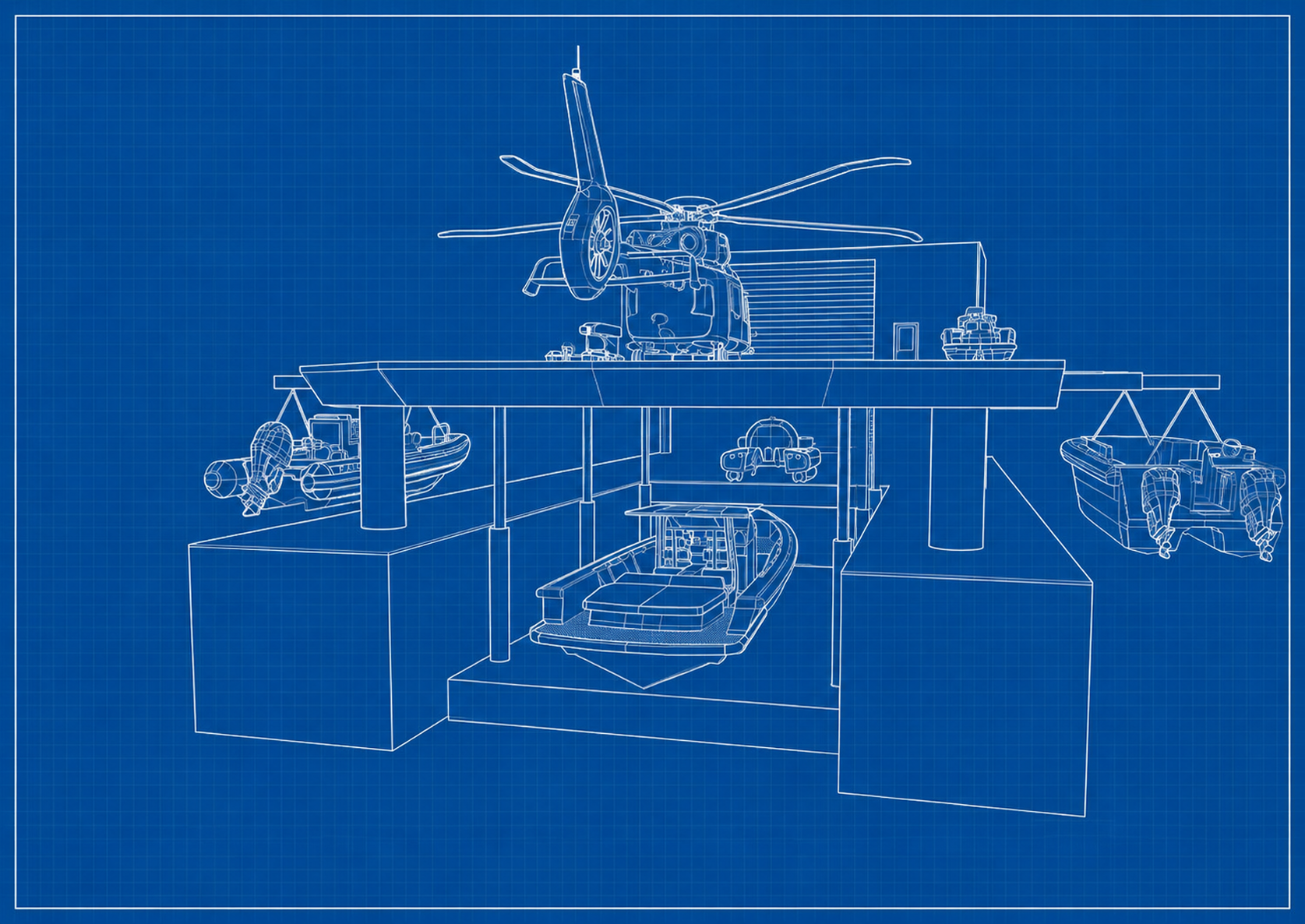
From Helicopter Storage to an Aviation Facility
For aviation professionals, the surrounding workspace is as important as the space occupied by the aircraft. A well-designed hangar can provide room for tools, spares, ground equipment and consumables. It can incorporate controlled storage and dedicated work areas. Most importantly, it gives engineers and aviation specialists an environment in which they can properly inspect, service and maintain the aircraft.
Availability Changes the Owner Experience
Hangaring provides another important benefit: availability. When the aircraft is protected, maintained and supported onboard, helicopter use can become a much more seamless part of the owner’s day rather than an operation that must be planned well in advance. The aviation team can keep the aircraft ready with onboard fuel, spares, maintenance facilities and dedicated technical support, reducing the logistics required to coordinate an aircraft arriving from shore or repositioning to meet the yacht.
For the owner, that readiness creates greater spontaneity. A change of plans, an unexpected destination or the decision to fly ashore does not necessarily require the same degree of advance coordination. The helicopter is already part of the program, with the infrastructure and personnel around it to support the next flight.

The SHADOWCAT Advantage
A SHADOWCAT vessel can carry the ecosystem that supports the aircraft, rather than simply carrying the aircraft itself. That is ultimately what separates carrying a helicopter from supporting a true aviation operation. The strength, beam and stability of the catamaran provide the platform. A certified helideck provides a purpose-built place to land. Hangars, fuel, maintenance facilities, spares and dedicated aviation personnel help keep the aircraft protected and ready. And by moving that entire operation away from the mothership, owners gain something equally valuable: the freedom to use their helicopter without asking the main yacht, or the guest experience, to accommodate it.